Whether it’s missing tools, untraceable pallets, or cumbersome search processes—many companies lack precise, real-time information about the current location of materials and equipment. Existing indoor localization systems are often expensive, complicated to install, and prone to malfunctioning in typical industrial environments with metal racks, machinery, and complex warehouse structures. The result: time-consuming search processes, inaccurate inventory counts, and unnecessary costs in intralogistics—from goods receipt through the warehouse all the way to production.
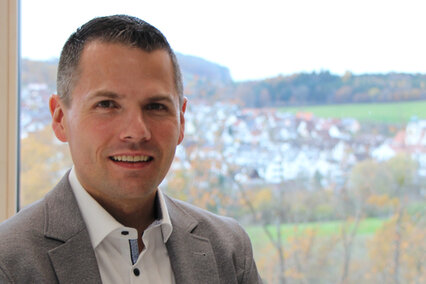
“LocaSense” relies on an approach previously known primarily from tunnels and mines: so-called leaky waveguides. These are special antenna cables that emit radio waves along their entire length, thereby creating uniform radio coverage. This concept is now being systematically applied to warehouses and industrial facilities for the first time. “The leaky waveguides are installed, for example, in suspended ceilings or cable ducts, thereby creating a multitude of antenna points across the entire facility,” explains Adam Kadad, one of the three founders behind “LocaSense.” Inexpensive, small radio-frequency tags (known as UHF RFID tags), which are affixed to containers or pallets, transmit their signals to a processing unit. “The position of the objects can thus be determined from the response signals with an accuracy of about one to three meters. This significantly reduces installation and maintenance costs; the solution is scalable and thus also economically attractive for small and medium-sized enterprises,” says the young man enthusiastically, who recently earned his bachelor’s degree in business administration for small and medium-sized enterprises at Aalen University of Applied Sciences.
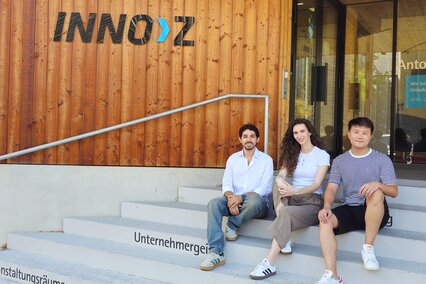
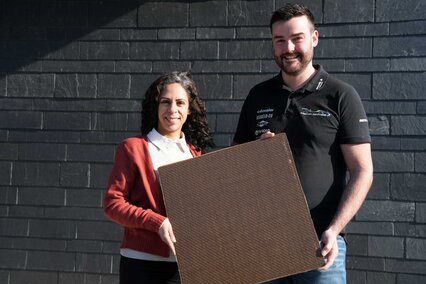
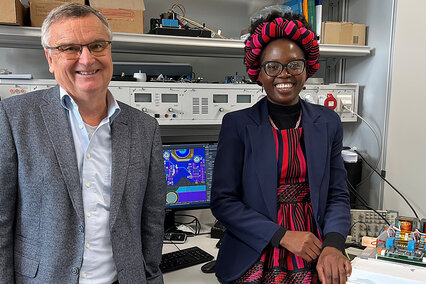
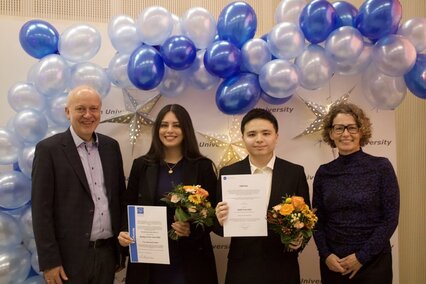
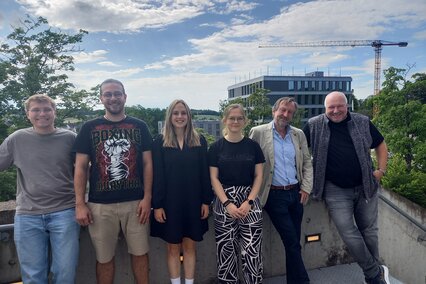
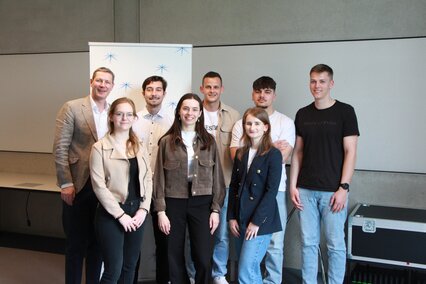
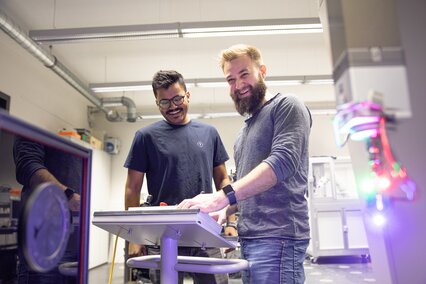
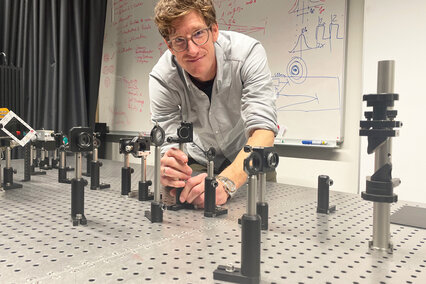
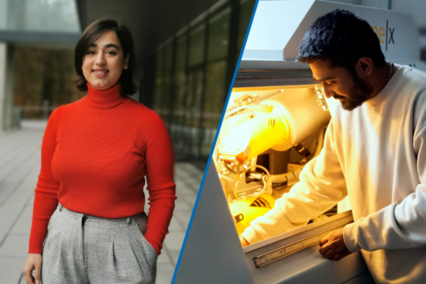
Kadad and his two “co-founders,” Sara Seperovic and Zhang Qiang, have already demonstrated the technical feasibility of the system: In a laboratory setup, the position of RFID tags was determined with an accuracy of one to two meters. “And with support from the Abtsgmünd-based Kessler + Co. Foundation for Education and Culture, we’ve developed a prototype. In the coming months, we plan to gradually develop the system into a market-ready product and test it in a real industrial setting with 100 to 200 square meters of warehouse space,” says Qiang Zhang, who works as a research assistant in the field of machine learning at Aalen University. “We’ve already received inquiries from several companies interested in collaborating,” says Sara Seperovic, who studied electrical engineering in Sarajevo and came to Aalen University about two years ago for a semester abroad.
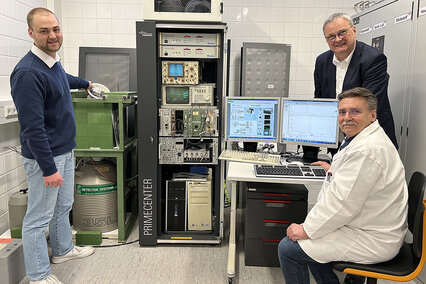
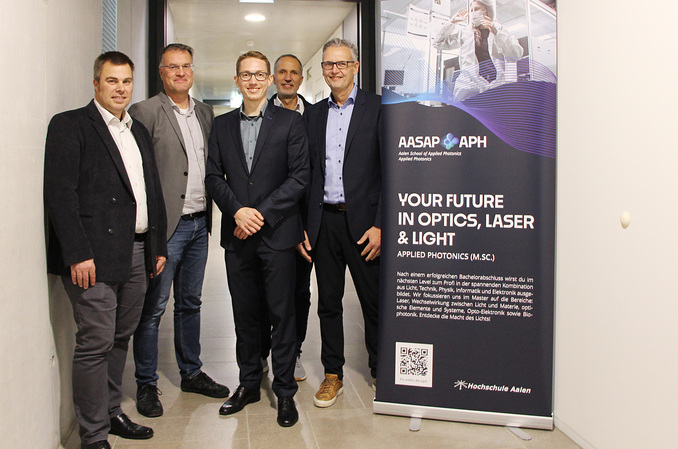
The idea for “LocaSense” originated in the lab of Prof. Dr. Stephan Ludwig, who teaches in the Faculty of Electronics and Computer Science. As a professor of digital technologies, he conducts research in the field of wireless communication and serves as a mentor for the project. The fact that it is now being funded by the EXIST startup grant is a particular success for him: “LocaSense demonstrates the potential that lies within the minds of our students and staff. As a mentor, I am particularly pleased that many years of research at the intersection of wireless technology and industry are now giving rise to a startup that is tangibly advancing the digitalization of the factory floor.”
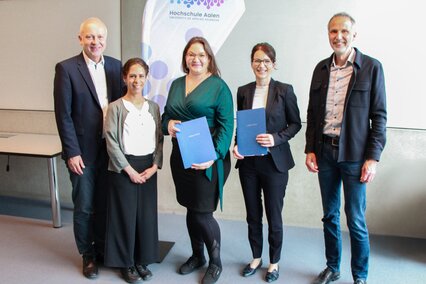
The EXIST Startup Grant is a federal funding program that supports students, graduates, and researchers as they take the step toward founding their own companies. For a limited time, it covers living expenses, operational costs, and coaching so that a promising business idea can become a market-ready startup. The new startup project is being implemented at the Innovation Center at Aalen University of Applied Sciences (INNO-Z). “With LocaSense, we’re reaching a special milestone: The tenth EXIST Startup Grant shows that Aalen University has established itself as a strong hub for startups. We’re delighted that more and more teams from university are taking the plunge into entrepreneurship,” says INNO-Z Managing Director Dr. Andreas Ehrhardt.
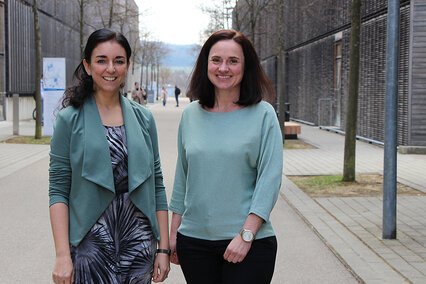
Adam Kadad, Sara Seperovic, and Qiang Zhang certainly have plenty of courage—after all, each of them took the leap from their home countries to Germany to build a new life here. And a bit of startup experience is already being incorporated into the new project. After fleeing Syria, Adam Kadad founded a small e-commerce business selling wall decorations, which he successfully sold four years ago. “These experiences motivated me to study business administration for small and medium-sized enterprises in Aalen. Self-employment has always been my goal,” says the 29-year-old, who—in addition to “LocaSense”—works as a consultant for the EXIST startup grant at Aalen University’s start-up campus. Kadad can’t imagine having a typical “9-to-5 job” where you just do what others tell you to do. That’s something he shares with his co-founders. “Building something of your own and creating something new in the process—that’s totally motivating!” the LocaSense team agrees.