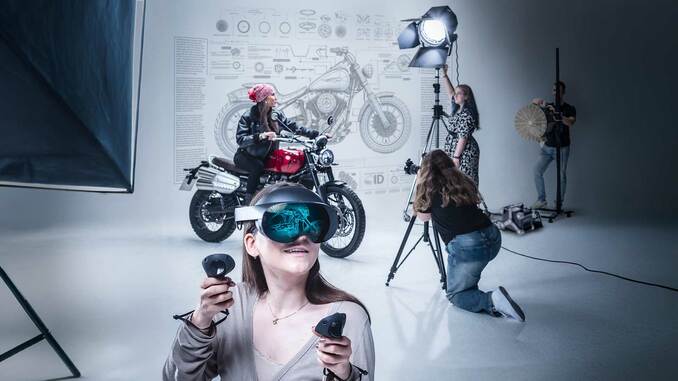
Information Design (Studierende im Fotostudio)
Developing human-centered information products
Everyone intuitively knows how to peel and eat a banana. But how do you elicit the inner values of a pomegranate without creating an unappetizing battlefield? It's almost impossible without instructions. Information designers always come into play when products are not or should not be self-explanatory. They communicate the secrets of complex products audiovisually.
Information designers prepare all product data throughout the life cycle so that people can make decisions and act competently. They refine raw data into relevant and meaningful information. Whether static, dynamic or interactive - on paper, in smartphones, as voice assistance, in augmented or virtual reality: as corporate communicators, online editors, information or knowledge managers, technical editors, they design information for the eyes and ears of companies, agencies or as freelancers.
Info talk on information design: questions, answers, insights

Bildquelle: Ratko – stock.adobe.com
Get to know the Bachelor's degree course in Information Design in person - in our open Zoom session. Every Wednesday (19:00) we answer your questions, provide insights into Studies and show what Human-Centered Design is all about. Non-binding, direct, live. You will receive the ZOOM link after registering for the respective date. The individual dates can be found under News > Dates, at the bottom).