Go to homepage
  • DE
  • EN
Search
Overview of study programs
  • Application process
  • Student advisory service
  • Scholarships
  • Orientation semester
Economy | Management
  • Bachelor
  • Master
Health | Natural Sciences
  • Bachelor
  • Master
  • Part-time
Engineering Sciences | Future Technologies
  • Bachelor
  • Master
Computer Science | Artificial Intelligence
  • Bachelor
  • Master
  • Part-time
Design | Communication
  • Bachelor
  • Master
Further education
Overview application & studies
  • Application portal
  • Online portals & services (Campus-IT)
  • Canvas
  • Lecture plan
Application process
  • Application & Enrollment for English-taught Programs
  • Student advisory service
Start of Studies
  • Living
  • Welcome Day
  • Semester plan / schedule (German)
Life on campus
  • Campus
  • Sports and free time activities
  • Living
Scholarships
  • Deutschlandstipendium
Prospective students
  • Study program
  • Subject areas
  • Application process
  • Student advisory service
  • Life on campus
  • Campus
  • Exchange studies in Aalen
Students
  • Start of studies
  • Online portals & services (Campus-IT)
  • Student Service Center (SSC)
  • Semester plan / schedule (German)
  • Life on campus
  • Mensa Lunchroom
  • Consulting services
  • Studium Generale
  • Learn languages
Researchers
  • Main research areas
  • Research institutes
  • Doctorate
Internationals
  • Our English-language study programs
  • Learn languages
  • Exchange studies in Aalen
  • International students & scientists
The public
  • News
  • Events
  • Press
  • Career
  • About us
  • Our topics
  • explorhino
Facility directory/finder
  • Start-up campus
  • Library
  • explorhino
International Center
  • Gain experience abroad
  • Exchange studies in Aalen
  • Erasmus+
  • International Campus
  • International students & scientists
  • Learn languages
Research
  • Lighthouse projects
  • Main research areas
  • Research infrastructure
  • Promotion of early career phases
  • Transfer: How we pass on knowledge
  • Research Academy
  • Further information
  • Research institutes
  • Publications
University of Applied Sciences
  • About us
  • Our Topics
  • Rectorate
  • Faculties
  • Campus
  • Career
  • Contact directory
  • Semester plan / schedule (German)
News
  • News
  • Events
  • Press
Departments & facilities
  • Student department
  • Library
  • Student advisory service
  • Mensa Lunchroom
  • Studium Generale
  • Learn languages
  • explorhino
    • Icon for Economy | Management Economy | Management
      • Bachelor
      • Master
    • Icon for Health | Natural Sciences Health | Natural Sciences
      • Bachelor
      • Master
      • Part-time
    • Icon for Engineering Sciences | Future Technologies Engineering Sciences | Future Technologies
      • Bachelor
      • Master
    • Icon for Computer Science | Artificial Intelligence Computer Science | Artificial Intelligence
      • Bachelor
      • Master
      • Part-time
    • Icon for Design | Communication Design | Communication
      • Bachelor
      • Master
    • Further education
    Icon for Overview of study programs Overview of study programs
    • Application process
    • Student advisory service
    • Scholarships
    • Orientation semester
    • Application process
      • Application & Enrollment for English-taught Programs
      • Student advisory service
    • Start of Studies
      • Living
      • Welcome Day
      • Semester plan / schedule (German)
    • Life on campus
      • Campus
      • Sports and free time activities
      • Living
    • Scholarships
      • Deutschlandstipendium
    Overview application & studies
    • Application portal
    • Online portals & services (Campus-IT)
    • Canvas
    • Lecture plan
    • Prospective students
      • Study program
      • Subject areas
      • Application process
      • Student advisory service
      • Life on campus
      • Campus
      • Exchange studies in Aalen
    • Students
      • Start of studies
      • Online portals & services (Campus-IT)
      • Student Service Center (SSC)
      • Semester plan / schedule (German)
      • Life on campus
      • Mensa Lunchroom
      • Consulting services
      • Studium Generale
      • Learn languages
      • Gain experience abroad
      • Sports and free time activities
    • Researchers
      • Main research areas
      • Research institutes
      • Doctorate
    • Internationals
      • Our English-language study programs
      • Learn languages
      • Exchange studies in Aalen
      • International students & scientists
    • The public
      • News
      • Events
      • Press
      • Career
      • About us
      • Our topics
      • explorhino
    • International Center
      • Gain experience abroad
      • Exchange studies in Aalen
      • Erasmus+
      • International Campus
      • International students & scientists
      • Learn languages
    • Research
      • Lighthouse projects
      • Main research areas
      • Research infrastructure
      • Promotion of early career phases
      • Transfer: How we pass on knowledge
      • Research Academy
      • Further information
      • Research institutes
      • Publications
    • University of Applied Sciences
      • About us
      • Our Topics
      • Rectorate
      • Faculties
      • Campus
      • Career
      • Contact directory
      • Semester plan / schedule (German)
    • News
      • News
      • Events
      • Press
    • Departments & facilities
      • Student department
      • Library
      • Student advisory service
      • Mensa Lunchroom
      • Studium Generale
      • Learn languages
      • explorhino
    Facility directory/finder
    • Start-up campus
    • Library
    • explorhino
Content
  • About us (on website)
Facility directory/finder

CitizenEnergyTurnaround

"Solar-Energy-Visualizer" Wordpress-Plugin
Practical application of the platform:
Competence center for innovative business models
  • About us (on website)
"Solar-Energy-Visualizer" Wordpress-Plugin
Practical application of the platform:
Competence center for innovative business models

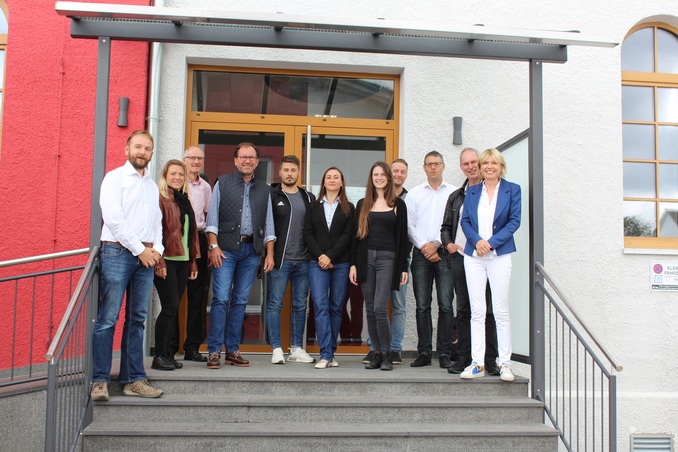
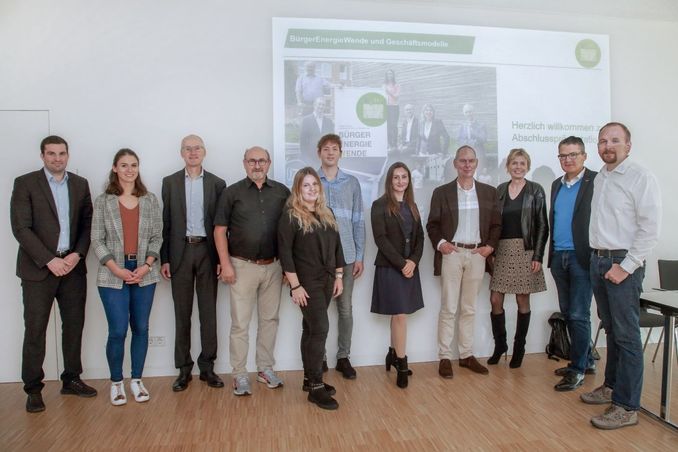
The project team from left: Lucas Winkler BWGV, Larissa Betz, Municipal Offices, Prof. Dr. Carsten Lecon, Hans-Peter Weber OBE, Luzia Berbecaru and Jannik Rößler Aalen University of Applied Sciences, Christina Neu-feld academic staff member at the university, Dr. Karlheinz Bozem Energy expert, Prof. Dr. Anna Nagl University of Applied Sciences, Roderich Kiesewetter Member of the Bundestag, Andreas Ensinger, Über-landzentrale Wörth-Altheim.


In order to achieve the goals of the energy transition, many citizens' energy cooperatives were founded in Baden-Württemberg around 2010. A total of almost 150 community energy cooperatives are active in the (federal) state. The business models of many community energy cooperatives are geared towards feeding electricity from PV, wind and biogas plants into the public grid at a guaranteed price for 20 years in accordance with the provisions of the Renewable Energy Sources Act (EEG). Due to changes to the EEG and the end of the subsidy period for the first attachments after 20 years, this business model is now reaching its limits. Against this backdrop, the Baden-Württemberg state government approved an inter-university [Adjektiv] project partnership in 2020 under the management of Prof. Dr. Anna Nagl from Aalen University of Applied Sciences in close collaboration with Hans-Peter Weber, the initiator and Chairman of OstalbBürgerEnergie eG. Together with the institution of higher education in Rottenburg and the local citizen energy cooperative "Erneuerbare Energien Rottenburg eG" as well as the implementation partner, Überlandzentrale Wörth/I.-Altheim AG, solutions were developed and tested in close coordination with the energy industry management expert Dr. Karlheinz Bozem on how the business models of citizen energy cooperatives and small and medium-sized Energy companies can be further developed in a sustainable manner.

Initially, the research focused on analyzing the current situation of community energy cooperatives. To this end, 150 citizen energy cooperatives in Baden-Württemberg were surveyed. 60 citizen energy cooperatives took part in the survey. The participation rate of 40% is encouragingly high. 83% of the cooperatives that took part in the survey base their business model on feeding electricity from renewable energy attachments (RES) into the grid in return for remuneration/payment under the EEG. In terms of future challenges, 85% of community energy cooperatives expect major to medium challenges in terms of adapting their business models. In addition to the need to further develop their business models, almost 80% of cooperatives face challenges with regard to the professionalization of executive management. The majority of the cooperatives surveyed also believe that the time (98%) and expertise (87%) of those working on a voluntary basis and the enormous amount of regulation (97%) are overstretched.

Future opportunities are seen in the construction and operation of charging stations for e-mobility, district heating networks and participation in ground-mounted PV systems, among other things. In some cases, community energy cooperatives can imagine getting involved in tenant electricity and contracting projects. In order to market the electricity from self-operated or member-operated renewable energy attachments in a meaningful way, entry into electricity trading or direct marketing is also seen (approx. 80%). This is precisely where Prof. Dr. Anna Nagl from the Aalen University of Applied Sciences, the President of the Rottenburg University of Applied Sciences, Prof. Dr. Dr. h.c. mult. Bastian Kaiser and energy economics expert Dr. Karlheinz Bozem see a good opportunity for the development of ecologically and economically resilient business models for citizen energy cooperatives. In collaboration, cooperation with OstalbBürgerEnergie eG (OBE) and erneuerbare Energien Rottenburg eG and under the academic leadership of the institutions of higher education, the research project objective was defined: "Through the platform-based bundling and marketing of renewable electricity generated in the region, we are creating a sustainable guarantee of success for citizen energy cooperatives and home-based renewable energy entrepreneurs."

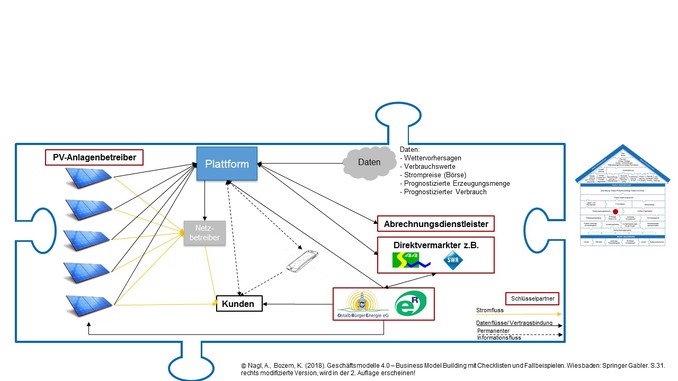
As none of the platform applications that use artificial intelligence to meet the requirements of community energy cooperatives and small and medium-sized energy companies are available on the market at financially justifiable prices, a customized platform was developed based on the basic business model developed as part of this research project. The key features of the platform to be developed are the bundling of the renewable electricity generated, which is then to be sold to the cooperative members and/or other customers who demand electricity. Shortfalls and surpluses in electricity are to be balanced out through collaboration, cooperation with regional/local energy companies, e.g. as balancing group managers. It is considered particularly important to predict the expected production and consumption volumes as accurately as possible. In order to achieve this, forecasts based on artificial intelligence (AI) are helpful, whereby weather forecasts and calendar events (weekdays, public vacations, vacations, etc.) in particular must be taken into account. For this purpose, the expertise of Professor Dr. Carsten Lecon and academic staff member Christina Neufeld from Aalen University of Applied Sciences was used. The forecast accuracy is 0.99 on a scale of 0-1 and can therefore be described as very good. The practice-orientated, with vocational-technical orientation, testing and implementation of the developments of this research project took place at the medium-sized energy company ÜZW AG under the Management of Andreas Ensinger, authorized signatory and Technical Head /Director.

The business ideas and the platform developed were presented by the project team to citizen energy cooperatives as part of a web seminar at the Baden-Württemberg Cooperative Association. The basic platform developed in the research project is available free of charge as an "open-source solution" to all interested community energy cooperatives and home-based renewable energy entrepreneurs.

The basic version of the platform was presented as part of the final presentation at VR-Bank Ostalb eG. This allows electricity consumers (members of community energy cooperatives or customers of municipal utilities) and electricity suppliers (e.g. PV system operators) to register as customers via the platform and then purchase or supply guaranteed "green regional electricity".

In her statement, the project manager of this inter-university [Adjektiv] project partnership, Prof. Dr. Anna Nagl, points to the Skills now available at Aalen University of Applied Sciences, which make it possible to develop such sustainable solutions. According to Nagl, this expertise is not only used to develop platforms for energy companies. Rather, this technology can also be successfully applied in other business areas, e.g. in innovative transportation topics in the form of intelligent commuter apps.

For the Baden-Württemberg Cooperative Association, however, the application developed here is particularly important for citizen energy cooperatives, as it provides important impetus for citizen energy cooperatives to further develop their business models, as Lucas Winkler, the person responsible for this area, emphasized.

In his statement, Roderich Kiesewetter, Member of the Bundestag, emphasized the importance of energy cooperatives and the participation of citizens for the success of the energy transition. This project shows what is possible when interested citizens and the Universities of Applied Sciences work together effectively, he said. In addition, the current political situation in Europe shows how important a largely self-sufficient energy supply is.

For state and federal politics, the project result shows how effectively public funds can be used in cooperation, cooperative venture, partnership, collaboration between science and practice; practical experience. The basic platform developed as an "open-source application" is thus available free of charge to citizen energy cooperatives and small and medium-sized energy companies for use and can be further developed by these companies in line with their own requirements.

Energy industry expert Dr. Karlheinz Bozem was very pleased that a practice-orientated, with vocational-technical orientation, research project had succeeded in demonstrating ways in which the business models of community energy cooperatives and regional and local energy companies can be innovatively developed. This will make a significant contribution to the success of the local energy transition.


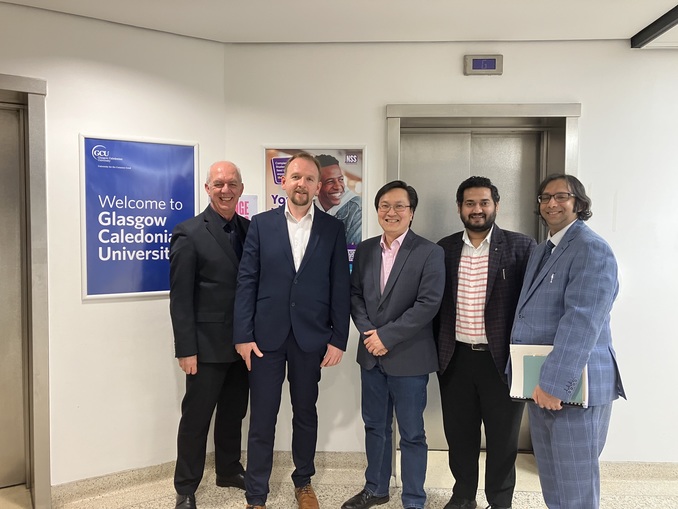
Aalen/Glasgow: On 30.03.2023, Andreas Ensinger successfully defended his doctoral thesis with the title "Innovation of existing business models of small and medium-sized energy companies in Germany - redesigning the product and service offering and the value chain". With a very high level of commitment and intensive supervision, counselling, support, mentoring and mentoring by Prof. Dr. Anna Nagl and Prof. Dr. Wilhelm Kleppmann on the part of Dr. Karlheinz Bozem, an energy economics expert who is strongly committed to research at Aalen University of Applied Sciences, Andreas Ensinger has researched innovative business models for the successful energy transition in Germany in his doctoral thesis in a scientifically sound and application-oriented manner. The photo shows Andreas Ensinger (2vl) after successfully defending his doctoral thesis at Glasgow Caledonian University (GCU) with his supervisor, counselling, support, mentoring, Professor Dr. Bruce Wood (l) and the external examiners.

Of great importance for this doctoral thesis were the ecologically and economically resilient business models developed within the framework of the "Innovative BürgerEnergieWende" project partnership funded by the MWK Baden-Württemberg at Aalen University of Applied Sciences in cooperation with OstalbBürgerEnergie eG and Überlandzentrale Wörth an der Isar AG (ÜZW AG). A key result of Andreas Ensinger's doctoral thesis is the concrete redesign of the product and service offering and the value chain of small and medium-sized energy companies.

This transformation process is necessary because traditional business models in small and medium-sized energy companies have so far hardly been innovated with regard to megatrends such as digitalization, artificial intelligence, big data, connectivity, smart city, servitization or home office. However, the digital skills and resources required for the successful implementation of these business models are usually not yet available to the extent required, but must first be built up accordingly.


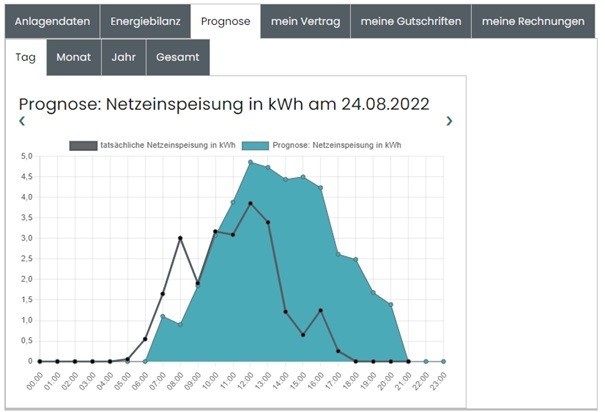
In this project, the "Solar-Energy-Visualizer" plugin was developed for a Wordpress site, which enables PV electricity producers and consumers to monitor electricity in their own customer area by visualizing energy consumption and energy feed-in Cost Estimating in real time. The quantity data (feed-in/consumption) is automatically transmitted using standard smart metering systems installed at the customer's premises.

An interface to the artificial intelligence also developed in this research project makes it possible to predict the electricity generation of photovoltaic systems listed on the platform. Automated time-based billing of electricity feed-in and consumption provides a precise overview of contract, feed-in and consumption prices. Deviations between the forecast and actual feed-in are mainly due to short-term changes in weather data.

Final report Innovative BürgerEnergieWende project partnership3.06 MBPDF


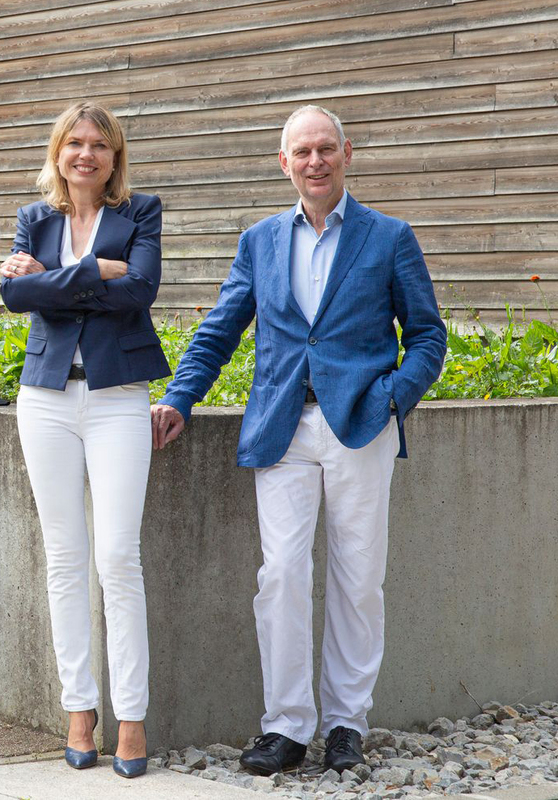
Equipped for the future thanks to modern methods and technologies: Prof. Dr. Anna Nagl and Dr. Karlheinz Bozem provide practical examples and structured recommendations for action for digital business models in their book. Photo credit: Aalen University of Applied Sciences/Hertfelder


Providing established corporations, medium-sized companies and start-ups with a practice-orientated, cross-industry guide to developing digital business models - that is the aim of Professor Dr. Anna Nagl, Head /Director of the Competence Center for Innovative Business Models at Aalen University of Applied Sciences, and Energy and Management expert Dr. Karlheinz Bozem. In their new book "Realizing digital business models successfully", they use current case studies to explain what is needed for this and provide readers with tools and checklists for developing innovative business models.

Whether digitalization, artificial intelligence, renewable Energy or Industry 4.0 - topics like these are driving technical progress across all industries. Regardless of whether they are start-ups, SMEs or global corporations, they all need to review their business models to adapt to the new technologies. "The basis for business models is always a brilliant business idea that is developed and described in the context of trends and new technologies. Behind every innovative business model, however, there must be a commercial, profitable, financial, cost-effective business case for long-term success - that is the key to success. Our book incorporates the findings from several years of research and industry project work," say the authors Professor Dr. Anna Nagl, Head /Director of the Competence Center for Innovative Business Models, and Dr. Karlheinz Bozem, Managing Director of bozem consulting associates munich.

Using concrete examples from practice; practical experience, business models from different industries and their strengths and challenges are highlighted. "When selecting the practical examples, we attached great importance to keeping the complexity of the respective case studies low so that readers from outside the industry can also have a good understanding of the individual steps of business model development and the respective business model," says Bozem.

Regional flagship models such as Carl Zeiss AG are used to show how even traditional companies can and must develop further. To this end, the global market leader at ZEISS Digital Partners combines the strengths of an established company and its proven methods with the speed of a start-up. The development of the "Smart green electricity supplier and service provider" business model will also be presented, for example. This business model was developed with the help of the Business Model Builder as part of the "Innovative Cooperation Project" of the Aalen University of Applied Sciences and the Rottenburg University of Applied Sciences, funded by the Ministry of Science, Research and the Arts Baden-Württemberg (MWK), in close collaboration, cooperation with bozem consulting associates munich.

The book provides readers with a structured and systematic guide to action with practical examples of digital business models that are equipped for the future thanks to modern methods and technologies.


Innovative project partnership develops ecologically and economically resilient business models for community energy cooperatives

An empirical survey of all community energy cooperatives in Baden-Württemberg (full survey) conducted as part of the framework of the research project shows that community energy cooperatives urgently need to take a close look at their business models. Simply feeding renewable electricity into the grid in return for a feed-in tariff is definitely none (!) of the business models with a future! In his closing statement during his visit to the research project team at Aalen University of Applied Sciences on September 16, 2021, Roderich Kiesewetter, member of the German Bundestag, was very impressed by the ideas and approaches that can be used to advance the further development of cooperative business models. According to him, it is imperative to involve local people in the success of the energy transition and there is no better way to do this than by involving energy cooperatives. He was convinced that the path outlined within the framework of the research project is sensible and effective. He promised to continue to support the work of the project team to the best of his ability in the future.


Meeting on platform development with a special field of billing in the "Innovative inter-university [Adjektiv] BürgerEnergieWende" project partnership at ÜZW on 24.08.2021 from 11 a.m. to 1 p.m.


December 01, 2020 With the discontinuation of EEG funding for PV attachments, the business models of many citizen energy cooperatives are eroding. As part of, within the framework of the "Innovative BürgerEnergieWende" inter-university [Adjektiv] project partnership funded by the Ministry of Science, Research and the Arts in Baden-Württemberg, the institutions of Applied Sciences in Aalen and Rottenburg and the citizen energy cooperatives OstalbBürgerEnergie eG (OBE) and erneuerbare Energien Rottenburg eG (eER) are working on sustainable solutions with the support of energy expert Dr. Karlheinz Bozem. The focus is on ecological and economic sustainability and IT feasibility. The aim is to market the electricity from "renewable energy attachments" that are no longer funded under the provisions of the Renewable Energy Sources Act (EEG) after a 20-year term, period of validity.

To this end, a powerful basic IT platform is currently being developed at Aalen University of Applied Sciences under the leadership of computer scientist Prof. Dr. Carsten Lecon, which will be used to record the surplus electricity from PV attachments and market it directly or via a direct marketer, giving precedence to customers in the region. The basic business model required for this was developed by Dr. Karlheinz Bozem together with Prof. Dr. Anna Nagl and doctoral candidate Max-Robert Salzer from the Competence Center for Innovative Business Models at Aalen University of Applied Sciences and Hans-Peter Weber, the CEO of OstalbBürgerEnergie eG, using the Business Model Builder.

See also the paper "The end of 20 years of subsidization of PV systems in Germany as a driver for the development of digital business models" as part of the proceedings of the 10th Solar & Storage Workshop under ISBN: 978-3-9820080-7-3.


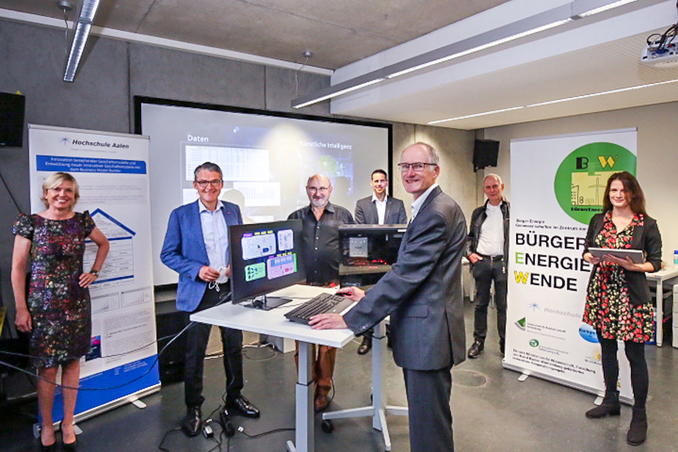
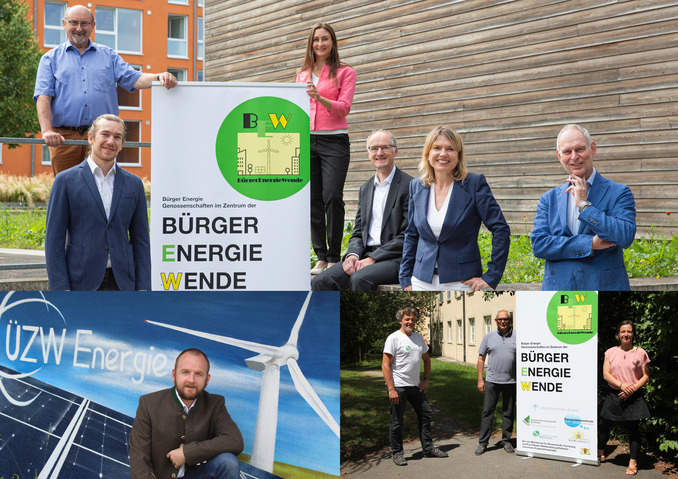
From left to right: (top section): Hans-Peter Weber, Max-Robert Salzer, Christina Neufeld, Prof. Dr. Carsten Lecon, Prof. Dr. Anna Nagl, Dr. Karlheinz Bozem, (bottom from left) Andreas Ensinger, Klaus-Jürgen Lehmann, Prof. Dr. Bastian Kaiser, Anja Hoh Image rights: www.ingridhertfelder.com


July 3, 2020 The Ministry of Science, Research and the Arts of the state of Baden-Württemberg is funding an innovative project partnership between Aalen University of Applied Sciences and the institution of higher education in Rottenburg as well as the citizen energy cooperatives OstalbBürgerEnergie eG (OBE) and erneuerbare Energien Rottenburg eG (eER). The aim of this research project is to develop innovative and sustainable business models for citizen energy cooperatives. The Renewable Energy Sources Act (EEG) subsidizes electricity fed into the grid from photovoltaic, wind energy and bioenergy plants for a period of 20 years. This means that the funding period for all attachments installed and in operation by December 31, 2000 will end at the end of the year. For these attachments, most of which are still fully functional, solutions must be found to ensure that they can continue to operate and feed electricity into the grid. This is an absolute necessity in order to achieve the goals of the energy transition. This affects most citizen energy cooperatives and operators of home renewable energy (RE) attachments.

The project team is led by Prof. Dr. Anna Nagl from Aalen University of Applied Sciences and Prof. Dr. Bastian Kaiser from Rottenburg University of Applied Sciences with their academic staff Max-Robert Salzer and Anja Hoh. Energy expert Dr. Karlheinz Bozem from Munich and Aalen computer science professor Prof. Dr. Carsten Lecon provide the energy industry and IT expertise. Hans-Peter Weber, Board of Management; members of the executive board of OstalbBürgerEnergie eG, and Klaus-Jürgen Lehmann, member of the executive board of eER, are working on the research project on behalf of the energy cooperatives. Supervised, counselling, mentoring by Prof. Dr. Stefan Pelz from the HfR and Dr. Karlheinz Bozem, Andreas Ensinger from Überlandzentrale Wörth/I.-Altheim Netz AG (ÜZW) is also working on the energy management and technical foundations in his Master's thesis in the Sustainable Energy Competence (SENCE) degree programme.

Prof. Dr. Anna Nagl's team is now investigating solutions for bundling the electricity produced by the old PV attachments and utilizing it in a commercial, profitable, financial, cost-effective manner. This involves analyzing stand-alone solutions that primarily focus on the self-use of electricity from renewable energies (RE) as well as intelligent marketing concepts. Stand-alone solutions are primarily aimed at home RE plant operators. The electricity is consumed directly on the installation site as far as possible. Electricity that is not consumed directly is temporarily stored in a battery and then used when the PV system is supplying none. This concept can be expanded to include electric cars and hot water storage. Currently, battery storage systems and, hopefully in the foreseeable future, car batteries will also function as bidirectional storage systems. These allow electricity to be both fed into and drawn from the storage units. Any surplus electricity is then fed into the public grid. It should be noted that more than half of PV attachments have an assignment, credit, performance of less than 10 kWp (kilowatt peak).

For larger attachments, self-consumption is at best an additional option. Other business models need to be developed here. For example, the project team is also employing an electronic energy platform to bundle the electricity and market it to interested customers. Particular challenges lie in predicting how much electricity will be produced or consumed in future periods, taking into account weather forecasts and customer consumption data. This requires the use of forecasting components and artificial intelligence. The functions of the citizen energy cooperatives here are to market the electricity from their own attachments as well as from the members' renewable energy systems. This is also the interface to municipal utilities and grid operators. Researching tailor-made solutions and business models here is the objective of the "Innovative inter-university [Adjektiv] BürgerEnergieWende" project partnership.

Further links:

https://www.facebook.com/erneuerbareEnergienRottenburg

https://www.instagram.com/p/CDDs0HxKHSd/


State supports inter-university [Adjektiv] research project between Aalen University of Applied Sciences and OstalbBürgerEnergie eG

April 20, 2020 As part of the highly competitive call for proposals "Innovative Projects" from the Ministry of Science, Research and the Arts Baden-Württemberg (MWK), in which priority is given to funding cross-university research projects with cooperation partners from the economy, the universities of Applied Sciences Aalen and Rottenburg, together with their citizen energy cooperatives, were awarded the contract in mid-April 2020. The measures developed in this innovative project partnership will contribute to the success of the energy transition in Baden-Württemberg. An important aspect of this is that the energy transition is supported by broad sections of the population.

OstalbBürgerEnergie eG (OBE), represented by its Board member Hans-Peter Weber, will lead this innovative project together with Professor Dr. Anna Nagl and her Competence Center for Innovative Business Models at Aalen University of Applied Sciences. Winfried Mack, member of the state parliament, and Roderich Kiesewetter, member of the federal parliament, were delighted with the decision of the nationwide jury of experts, which recommended funding for the inter-university [Adjektiv] application to the ministry. Prof. Dr. Nagl added that it is extremely important from an economy, business and time perspective to research and test in practice; economically, economically viable and ecologically sustainable business models for the use of PV attachments after the guaranteed feed-in tariff has expired. At the end of this year, the period of guaranteed feed-in tariffs will end for the first photovoltaic systems. From this point onwards, the attachment operators will have to market the environmentally friendly electricity generated by these PV systems themselves.

For the OstalbBürgerEnergie cooperative, this commitment is a particular challenge, according to Hans-Peter Weber, a member of the (managing) board. The aim is to develop models for OBE together with eER Erneuerbare Energien Rottenburg that enable the numerous Energy cooperatives in the state to develop in a commercially, profitable, financially, cost-effective manner. According to Weber, working groups and expert committees will be looking for sensible solutions. The intention is to maintain close contact with the Baden-Württemberg Cooperative Association. Of course, the storage of electricity in decentralized home storage systems and the use of electric car batteries will also play an important role. Weber appealed to politicians not to undermine the energy transition that has been initiated and is urgently needed from a climate perspective. There is an urgent need to further expand the use of solar and wind energy. In view of the fact that electricity from renewable energies is generated decentrally, i.e. close to the consumer, there is also an urgent need to discuss the topic of "grid fees". A distance component is needed here, which takes into account when decentrally generated electricity is fed into the grid but the consumer is only a short distance away from the producer.

Of course, Lord Mayor Thilo Rentschler, as Chairman of the Supervisory Board of OBE, also welcomes the approval notice from Stuttgart. This provides a good basis for the further development of the business models of OstalbBürgerEnergie and other energy cooperatives.

Funded by the MWK: "Innovative cross-institution and cross-faculty project partnership:
Ecologically and economically resilient business models for citizen energy cooperatives:
A best practice model to support the successful energy transition in BW
Short title: "BürgerEnergieWende

Innovative projects/project partnerships (Chapter 1403, Title Group 75)

Reference number: 32-7545.220/29/1


Project duration: 01.07.2020 to 30.09.2022


Summary of the project

Since 2021, PV attachments are no longer eligible for remuneration/payment under the EEG. The electricity produced by these old PV systems must be marketed by the system operators themselves. Many small and medium-sized system owners are "overwhelmed" by this. Without the offer of solutions, e.g. from community energy cooperatives and municipal utilities or regional energy companies, old PV systems would and will be dismantled, resulting in a reduction in renewable energy capacities.

The "Innovative inter-university [Adjektiv] project partnership: Ecologically and economically resilient business models for citizen energy cooperatives: A best practice model to support the successful energy transition in Baden-Württemberg (BürgerEnergieWende)" is thus making a valuable contribution to the success of the energy transition in Baden-Württemberg. If they are willing to innovate their business models, citizen energy cooperatives can actively support the energy transition by means of innovative platform-driven business models for a broader section of the population.

The aim of the digital artificial intelligence (AI)-based platform solution developed in this research project is to realize user-friendly business models. In this innovative cross-faculty and cross-university project partnership, 10 relevant business models were researched and developed using the Business Model Builder and published in the Springer Gabler book "Digitale Geschäftsmodelle erfolgreich realisieren".

An AI-based scalable platform application was developed for the so-called basic business model. This business model was tested in pilot operation at the energy company ÜZW AG and is now successfully in use there: www.nachbarschaftsstrom-bayern.de

The open source plugin called "Solar-Energy-Visualizer" developed in the innovative project partnership can be downloaded from this Wordpress website at the following link: https: //wordpress.org/plugins/pv-anlagen/

Read more in the final report:

Final report Innovative BürgerEnergieWende project partnership3.06 MBPDF

Applicant/overall project management Aalen University of Applied Sciences

Prof. Dr. Anna Nagl, Dean of Studies, Management Competence Center for Innovative Business Models, Aalen University of Applied Sciences, Beethovenstraße 1, 73430 Aalen, Phone: 07361 576-4601, Mail: Anna.Nagl[at]hs-aalen.de; www.hs-aalen.de/buergerenergiewende


Applicant/Project manager, project coordinator, head of the project, institution of higher education Rottenburg (HFR)

Prof. Dr. Dr. h.c. mult. Bastian Kaiser, President, Professorship for Applied Business Administration, International Development Cooperation, Institution of higher education Rottenburg, Schadenweilerhof, 72108 Rottenburg am Neckar, Tel.: 07472 951-203, Mail: BKaiser[at]hs-rottenburg.de


1. science and scholarshop (allgem.)

Prof. Dr. Carsten Lecon, degree programme Computer Science, Aalen University of Applied Sciences, Anton-Huber-Str. 25, 73430 Aalen, Tel.: 07361 576-4365, Mail: carsten.lecon[at]hs-aalen.de

Prof. Dr. Stefan Pelz, Professorship for Forest Utilization - Wood Use and Wood Energy; Institute for Applied Research (IAF); Head / Director of the M.Sc. Sustainable Energy Management and Technology (SENCE), Rottenburg University of Applied Forest Sciences, Schadenweilerhof, 72108 Rottenburg am Neckar, Germany, Tel.: 07472 951-281, Mail: pelz[at]hs-rottenburg.de


1. science and scholarshop (doctoral project)

Prof. Dr. David Harrison, School of Engineering and Built Environment, Glasgow Caledonian University, Glasgow, G4 0BA, UK


Expert to the team

bozem | consulting associates | munich (bca-m), Dr. Karlheinz Bozem, Owner, Kunstmannstr. 5, 80997 Munich, Germany


Cooperation partner, economy, business

OstalbBürgerEnergie eG, Hans-Peter Weber, Director, Im Hasennest 9, 73433 Aalen, Germany

eER - erneuerbare Energien Rottenburg eG, Klaus J. Lehmann, Director, Wilhelm-Maybach-Straße 8, 72108 Rottenburg am Neckar, Germany


City of Aalen, former Lord Mayor Thilo Rentschler & Lord Mayor Frederick Brütting/Chairman of the Supervisory Board of OstalbBürger Energy eG, Town Hall Aalen, Marktplatz 30, 73430 Aalen


Implementation partner

Überlandzentrale Wörth/I.-Altheim AG, Regensburger Straße 33, 84051 Altheim

About us (on website)

Professor Dr. Anna Nagl
Management "Competence Center for Innovative Business Models"
Aalen University of Applied Sciences - Aalen University
Beethovenstr. 1
D - 73430 Aalen

+ 49 7361 576-4601
anna.nagl[at]hs-aalen.de


buergerenergiewende

https://nachbarschaftsstrom-bayern.de/


This scheme, enterprise, aim, goal was funded with funds, financial resources of the Ministry of Science, Research and the Arts.

The authors are responsible for the contents.

AI Search

Hello, I am your AI search.

Ask me something!

    Frequently searched:

    Artificial Intelligence & Computer ScienceBachelor Artificial Intelligence & Data Science
    Go to homepage
    Beethovenstraße 1, 73430 Aalen
    +49 7361 576-0
    info[at]hs-aalen.de

    Overview

    • Library
    • Study program
    • Application & studies
    • International
    • Research
    • University of Applied Sciences
    • Semester plan / schedule (German)
    • Departments & facilities

    Information

    • Prospective students
    • Students
    • Researchers
    • Internationals
    • Career at the university

    Important Information

    • Imprint
    • Data protection
    • Accessibility
    • Easy read
    Follow us on
    © 2026 Hochschule Aalen
    Language
    • DE
    • EN