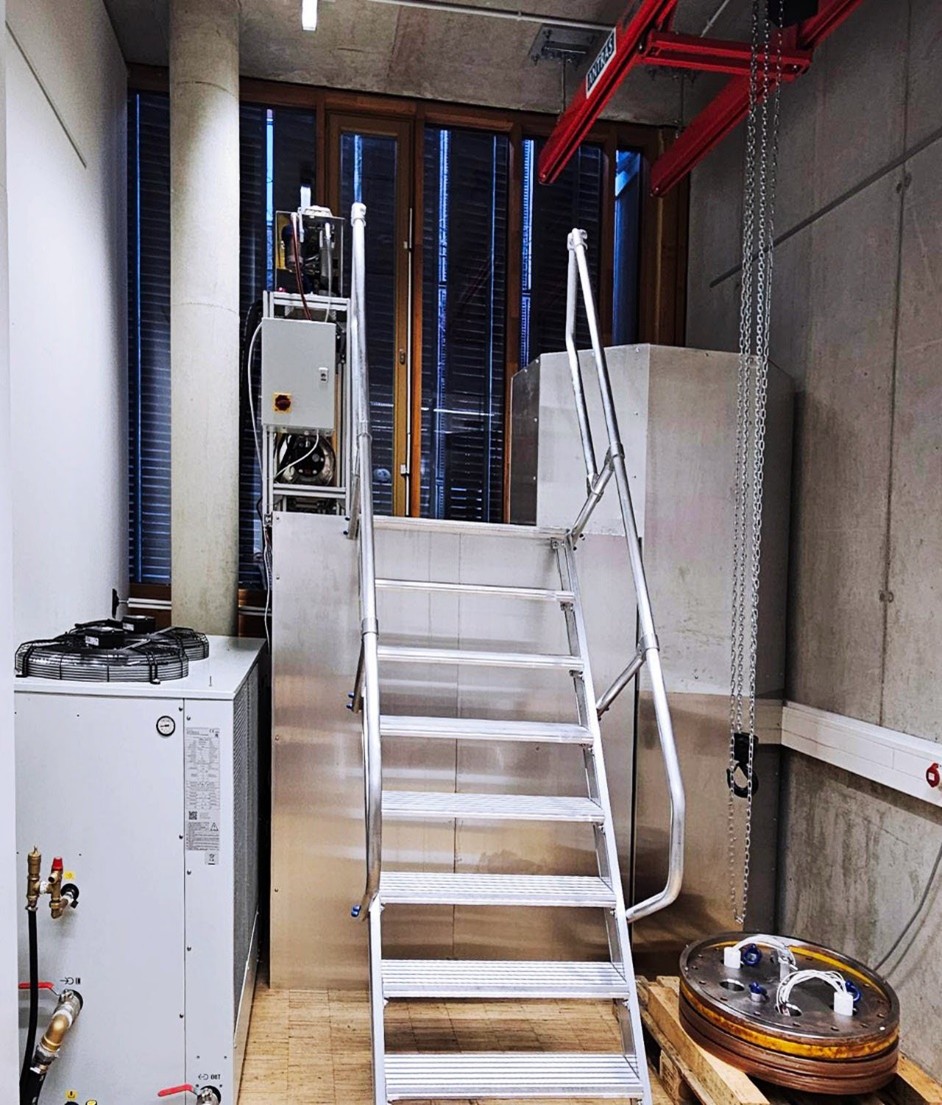
Environmental Simulator (Subsea Simulator)
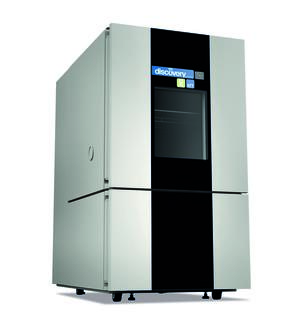
The environmental simulator used at the Institute for High Integrity Mechatronic Systems (ZMS) was developed and successfully implemented as part of the CHARISMA research project. Since then, it has served as a central and sustainable research infrastructure for a wide range of applications in maritime and mechatronic research.
The simulator enables realistic replication of environmental conditions encountered at great water depths. In particular, it can simulate pressure conditions corresponding to depths of up to approximately 3,000 meters. This is complemented by a wide temperature range, allowing investigation of a variety of operational scenarios under differing climatic conditions.
By combining high-pressure and temperature control, the environmental simulator provides ideal conditions for the experimental analysis and validation of components and systems intended for subsea deployment. This includes, among others, mechatronic assemblies, sensors, actuators, and complete subsea systems.
The environmental simulator thus represents a key unique feature of ZMS and forms the foundation for hands-on research, development, and qualification of reliable technologies under extreme environmental conditions.